
Where Does the 2030 Commitment Stand?
Over fifteen years into the AIA 2030 Commitment and just four years from its deadline, Nathan Kipnis reflects on how far the profession has come — and how much work remains.
When the AIA launched the 2030 Commitment in 2009, net-zero energy buildings felt aspirational at best — especially in cold-climate cities like Chicago. At the time, many in the profession believed that carbon-neutral buildings were something we might achieve someday, but not within a generation. Today, with just four years left until 2030, the conversation has fundamentally changed. The question is no longer whether high-performance, low-carbon buildings are possible — the question is whether we, as a profession, are moving fast enough to deliver them at scale.
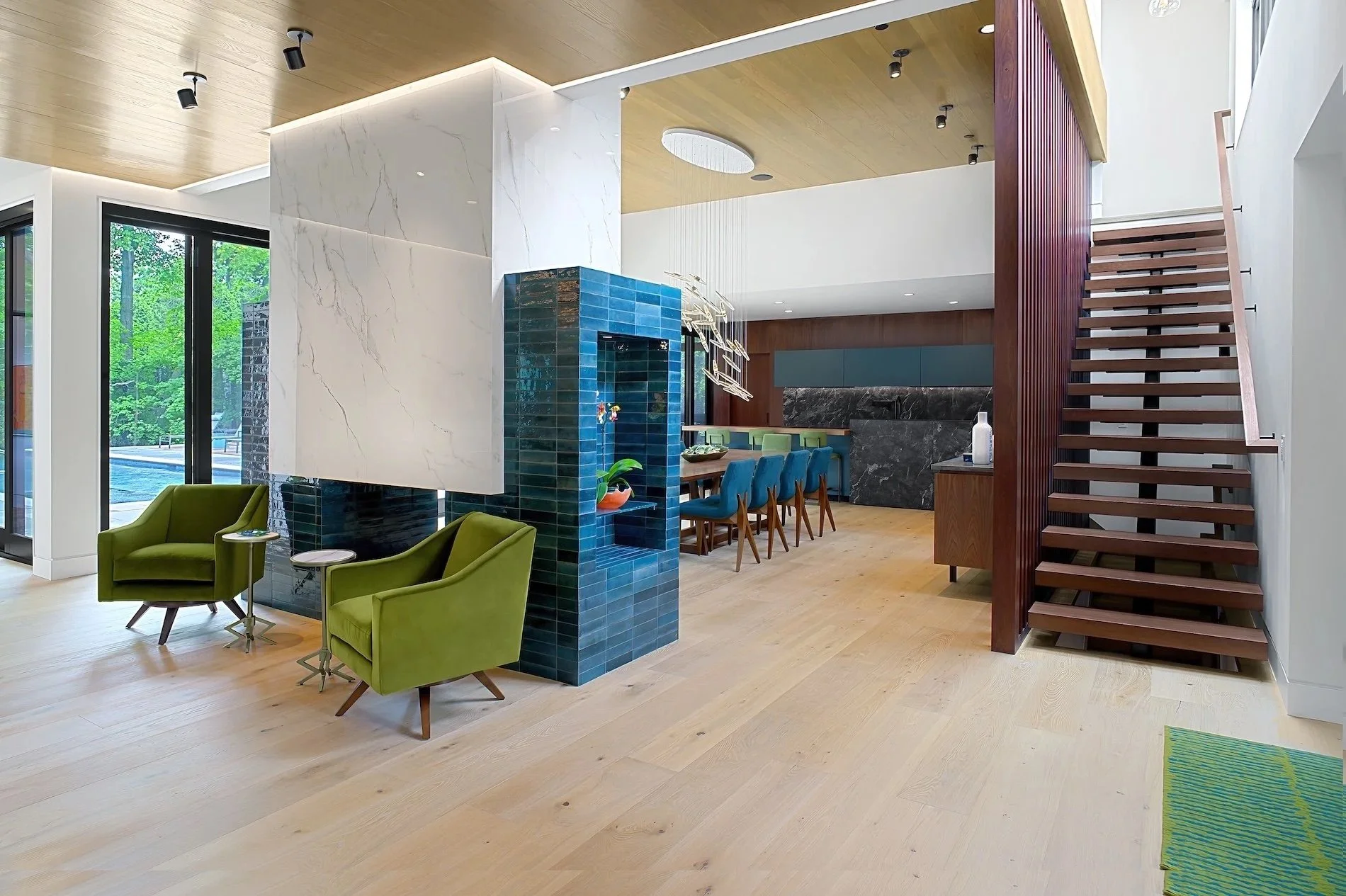
This North Shore home features locally sourced materials anchored by energy-efficient windows and all-electric systems.
What is the AIA 2030 Commitment?
The AIA 2030 Commitment is a voluntary reporting and tracking program that asks architecture firms to measure the predicted energy use of their projects against a standardized baseline, with the goal of achieving carbon-neutral buildings by 2030. It is important to understand what the Commitment is — and what it is not. It is not a certification system; rather, it is a tool for transparency and accountability. Its value lies in measuring real performance, tracking progress over time, and allowing the profession to collectively assess whether our intentions are translating into results.
I have been involved with the 2030 Commitment since its earliest days. I was a member of the AIA Chicago 2030 Commitment Working Group from 2009 to 2014, and I served on the AIA National 2030 Commitment Working Group from 2014 to 2020, including as co-chair from 2018 to 2019. I’ve seen the program evolve from a simple spreadsheet into a national dataset that now represents billions of square feet of built work. I’ve also seen how dramatically both our tools and our expectations have changed.
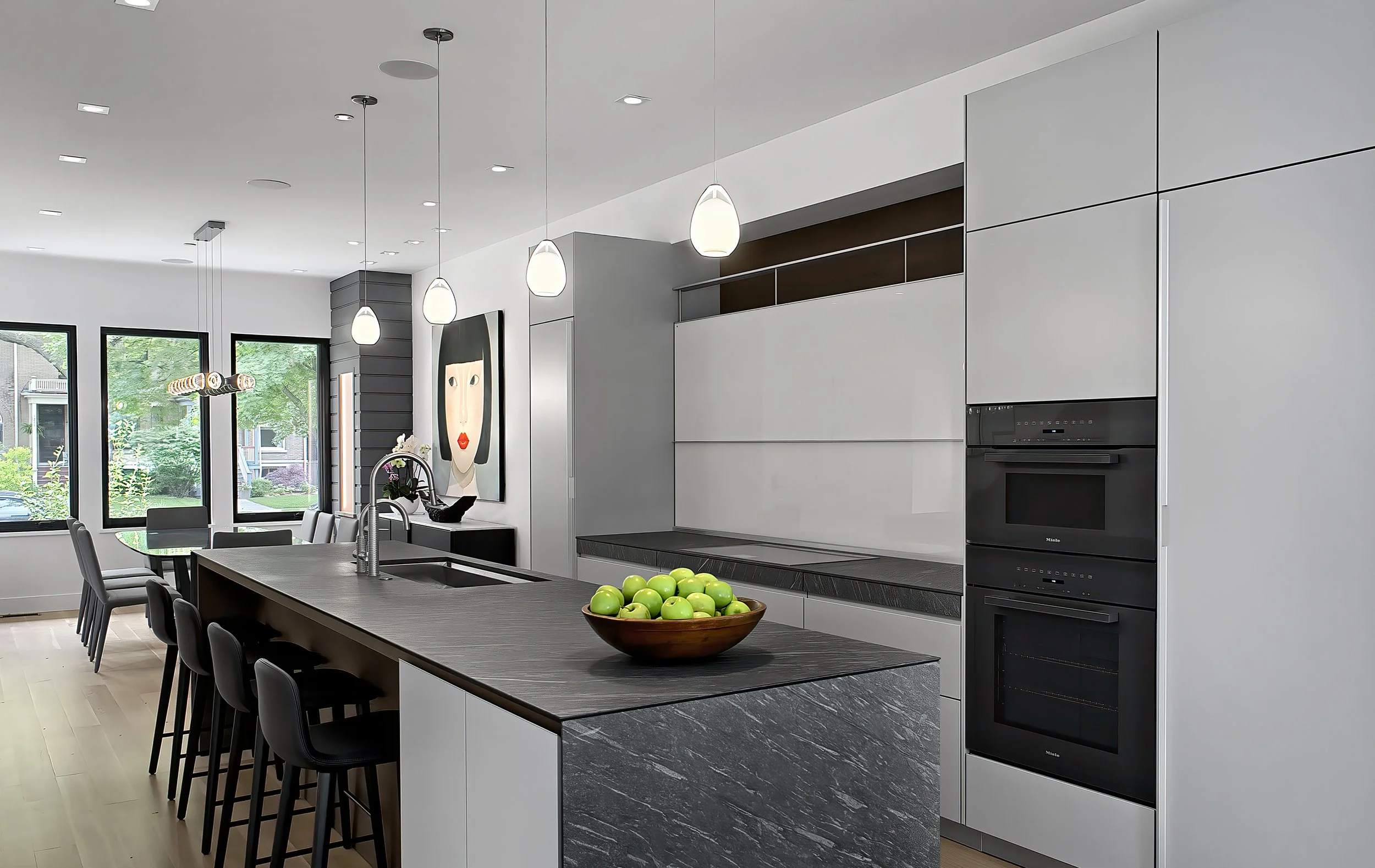
This is the kitchen of Evanston’s first Certified Passive House, which also achieved PHIUS Zero certification — meaning it generates more energy than it consumes each year.
What is the status of the AIA 2030 Commitment?
As of the most recent reporting cycle, projects participating in the 2030 Commitment are achieving an average 56 percent reduction in predicted energy use intensity compared to baseline. That number represents roughly four billion square feet of reported building area. Is 56 percent where we need to be? No — the target is 100 percent. But the trajectory matters. In 2009, achieving net-zero performance was widely considered impossible, particularly in northern climates. Today, we have projects that are performing better than 100 percent. We are now designing buildings that can function essentially off-grid, even in harsh Chicago winters — something that would have been dismissed outright when the Commitment began.
For several years, annual improvements hovered around three percentage points. In the most recent year, that number jumped six points, from 50 to 56 percent, coinciding with the largest amount of square footage ever reported. That acceleration tells me that when firms engage seriously with the Commitment, performance improves more quickly than many expect.
Participation, however, remains one of our biggest challenges. Only about 450 firms are currently reporting through the 2030 Commitment. The majority of reported square footage comes from very large firms that may deliver hundreds of millions of square feet annually. Their participation is critical, but it is not enough. We will not meet our climate goals without far greater engagement from small and mid-sized firms, which collectively shape an enormous portion of the built environment. There are encouraging signs — this year, 27 firms achieved an 80 percent reduction from baseline, and 18 firms reached Target Zero — but those numbers should be far higher. A large percentage of these high-performing firms are small and medium-sized.
Performance also varies significantly by building type. Single-family residential and mixed-use projects consistently outperform other categories, and they are the only two building types that regularly exceed targets. Mixed-use performance is particularly interesting, as programmatic diversity often allows energy loads to balance more efficiently. On the other end of the spectrum, healthcare and laboratory buildings remain extremely challenging due to energy-intensive equipment that architects often have little control over. That reality doesn’t absolve us of responsibility, but it does underscore the need for nuanced expectations.
One of the most frustrating data points for me is electrification. In the most recent reporting cycle, just over 1,500 all-electric buildings were reported nationwide. While that number is up from the year before, it is still astonishingly low given where the technology is today. Designing an all-electric building is no longer difficult. We now have highly efficient building envelopes, cold-climate heat pumps, induction cooktops, electric water heaters and dryers, and solar panels whose costs have dropped dramatically over the last several decades. A cold climate is no longer an excuse. Germany, for example, has an almost identical climate to Chicago — and has millions of buildings already using efficient electric heating technologies, far outpacing the U.S. (Roughly 70 percent of new construction in Germany now features heat pumps and other electric systems.) At this point, the barriers are far more cultural than technical.
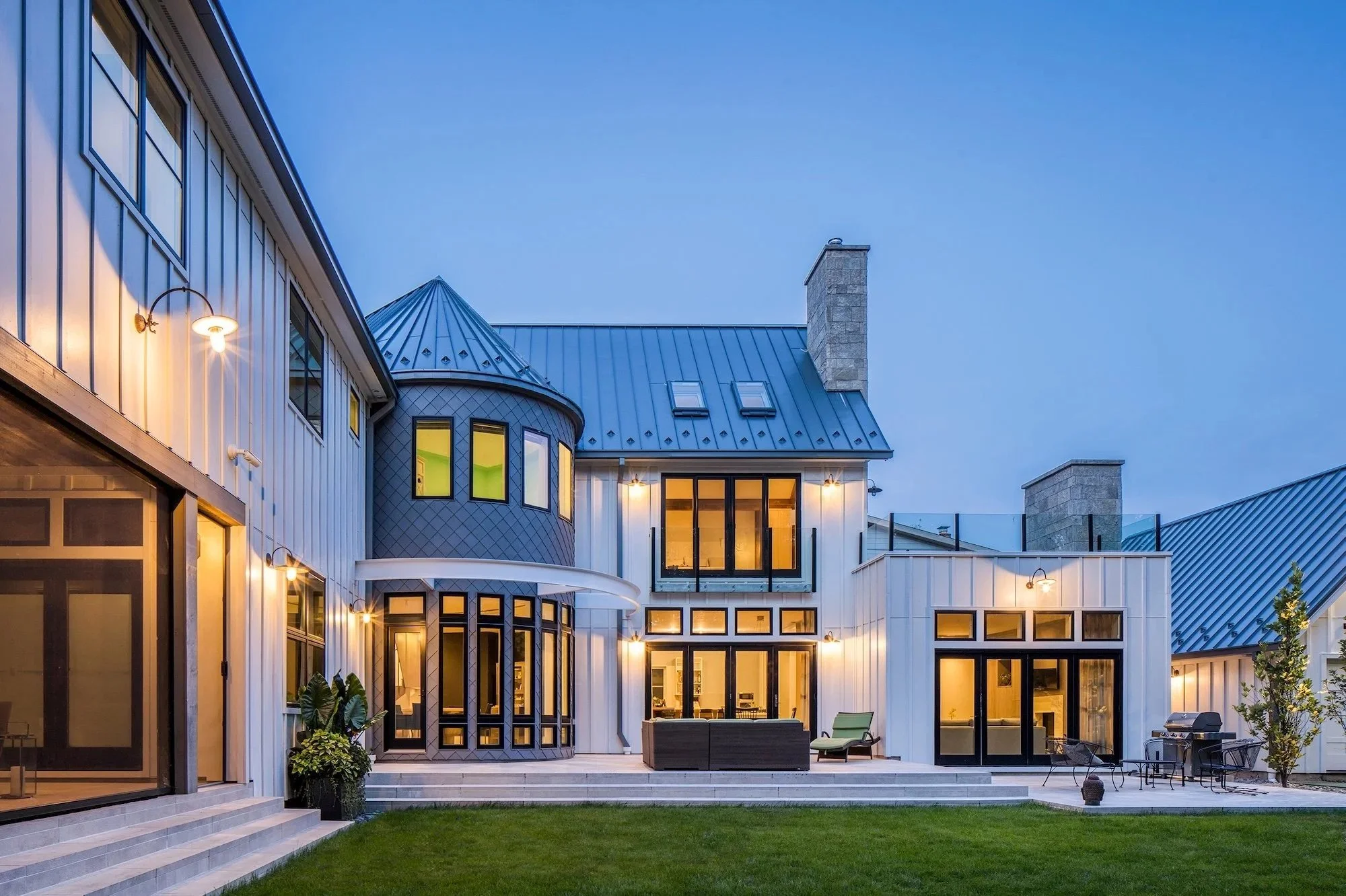
With solar-oriented rooflines, this five-lot home also features a variety of salvaged materials and is all-electric.
How can we improve these statistics?
In practice, Net Zero buildings almost always require Passive House–level performance. Without an extremely efficient envelope, the math simply doesn’t work. Through NextHaus Alliance, we have designed and built a certified Passive House in Evanston (and have two additional Passive House projects awaiting final certification), and we continue to apply those lessons to new projects. These buildings are no longer experimental. They are comfortable, resilient, increasingly cost-effective, and entirely achievable with today’s tools and materials.
Looking ahead, embodied carbon is the next frontier. We already understand that materials such as brick, steel, aluminum, and petroleum-based insulation carry significant carbon impacts. Increasingly, we are turning to strategies like all-wood framing, cellulose and wood-based insulation, and more thoughtful material selection. While embodied carbon analysis once felt intimidating, it has become far more accessible. When teams begin doing this work, it quickly becomes clear that it is manageable — and essential.
When the 2030 Commitment began, 2030 felt distant. Now, it is four years away. Sadly, every time environmental issues capture the zeitgeist, something else threatens to push them aside — housing affordability, geopolitical conflict, economic uncertainty. But this is not an either-or proposition. We are capable of addressing multiple challenges at once. Renewable energy is now the cheapest form of energy at scale. The technology exists. The data is clear. And the excuses are running out.
The 2030 Commitment gives us a way to measure whether our values are being reflected in our work. It isn’t perfect, but it is powerful. And ultimately, it only works if more of us choose to participate. At this point, we know what needs to be done. The only question left is whether we are willing to do it.
Nathan Kipnis, FAIA, LEED BD+C, is the principal of Kipnis Architecture + Planning (KAP) and the founder of NextHaus Alliance. Recognized as one of Chicago’s premier award-winning sustainable architecture firms, KAP has been shaping innovative spaces since 1993. With offices in Evanston, Illinois, and Boulder, Colorado, KAP is a national leader in its signature philosophy of High Design / Low Carbon. The firm is especially known for seamlessly integrating passive solar strategies and bioclimatic design into every project.